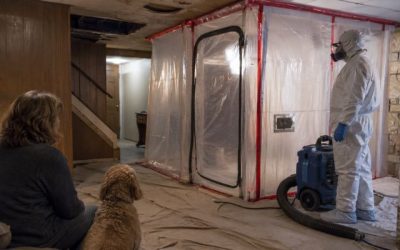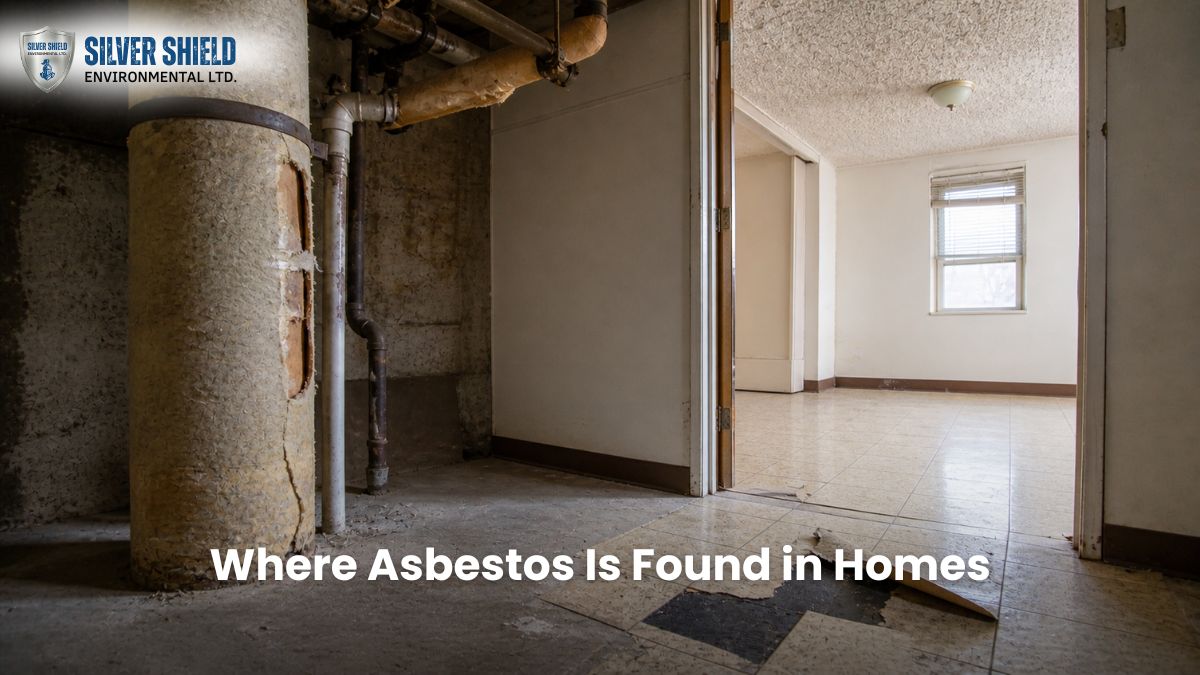
If you’re planning a renovation or dealing with an older property, one of the most important questions to ask is:
Where could asbestos be hiding in this home?
The truth is, asbestos doesn’t always stand out. It was used in dozens of common building materials, and in many cases, it still exists in homes today.
This guide walks you through exactly where asbestos is commonly found – room by room – so you know what to look for, when to test, and what to do next.
Quick Answer: Where Is Asbestos Most Commonly Found in Homes?
Asbestos is most often found in:
- Pipe insulation and boiler wrap
- Popcorn ceilings and textured coatings
- Vinyl floor tiles and adhesives (mastic)
- Attic insulation (especially vermiculite)
- Cement siding and roofing materials
- Wall patching compounds and drywall joints
These materials were widely used in homes built or renovated before the 1980s.
👉 Learn more basics here:
What is Asbestos?
Why Older Homes May Still Contain Asbestos
Homes Built Before the 1980s
Asbestos was widely used for durability, fire resistance, and insulation.
Renovation History Matters
Even if your home was built later, renovations using older materials may still introduce asbestos.
You Can’t Confirm by Sight
Many asbestos-containing materials look identical to safe ones.
According to the U.S. Environmental Protection Agency, asbestos may still be present in many building materials used in older homes.
Basement: One of the Most Common Asbestos Areas
Basements often contain the highest concentration of asbestos materials.
Where to Check
- Pipe insulation (white, gray, or cloth-wrapped)
- Boiler and furnace insulation
- Duct insulation
- Old floor tiles and adhesive
Why It Matters
These materials can become hazardous if they deteriorate or are disturbed.
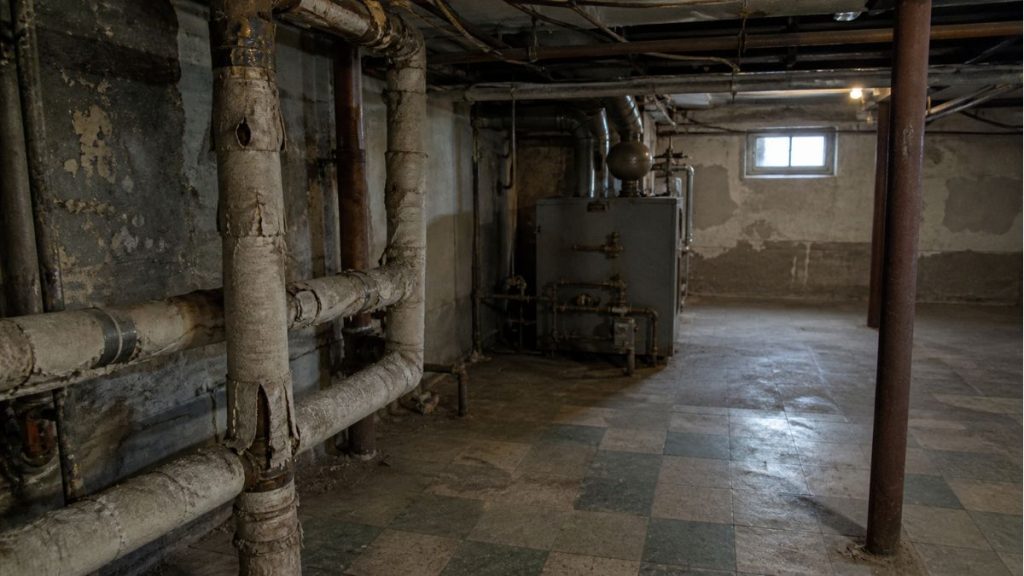
Old residential basement showing aging pipe insulation and boiler system- areas where asbestos materials are commonly found in older homes.
Attic: Hidden Asbestos Risk
Attics are often overlooked but can contain significant asbestos materials.
Where to Check
- Loose-fill insulation (especially vermiculite)
- Pipe or chimney insulation
- Dust-like insulation around beams
Risk Insight
Loose insulation can spread easily if disturbed, increasing exposure risk.
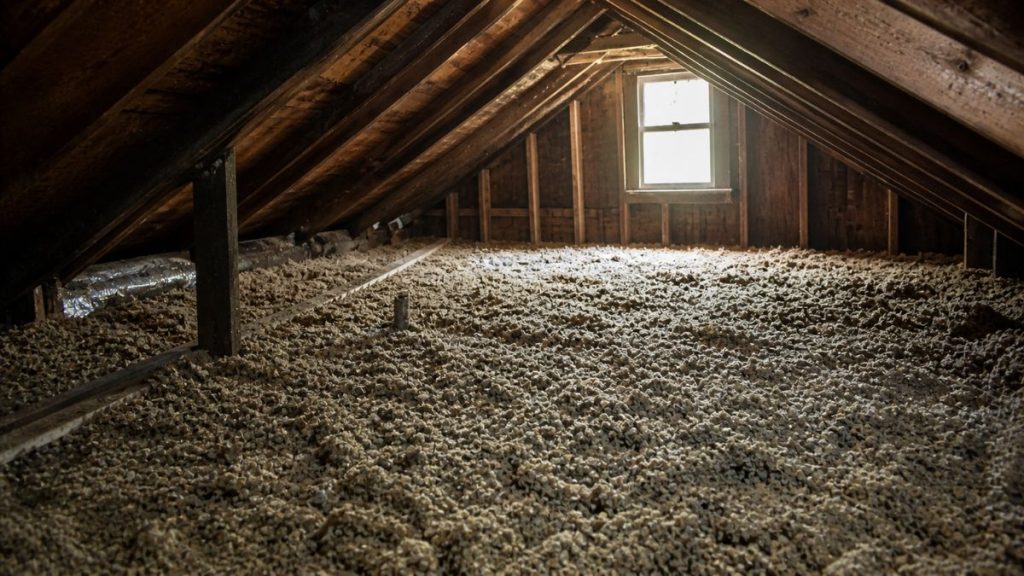
Older attic with loose-fill insulation and exposed beams—areas where asbestos-containing materials may be present in older homes.
Kitchen & Bathroom Areas
These areas often contain asbestos in flooring and wall materials.
Where to Check
- Vinyl floor tiles (especially 9×9 tiles)
- Sheet flooring backing
- Adhesive (black mastic)
- Wall patching compounds
Why It Matters
Flooring removal is one of the most common ways asbestos is accidentally disturbed.
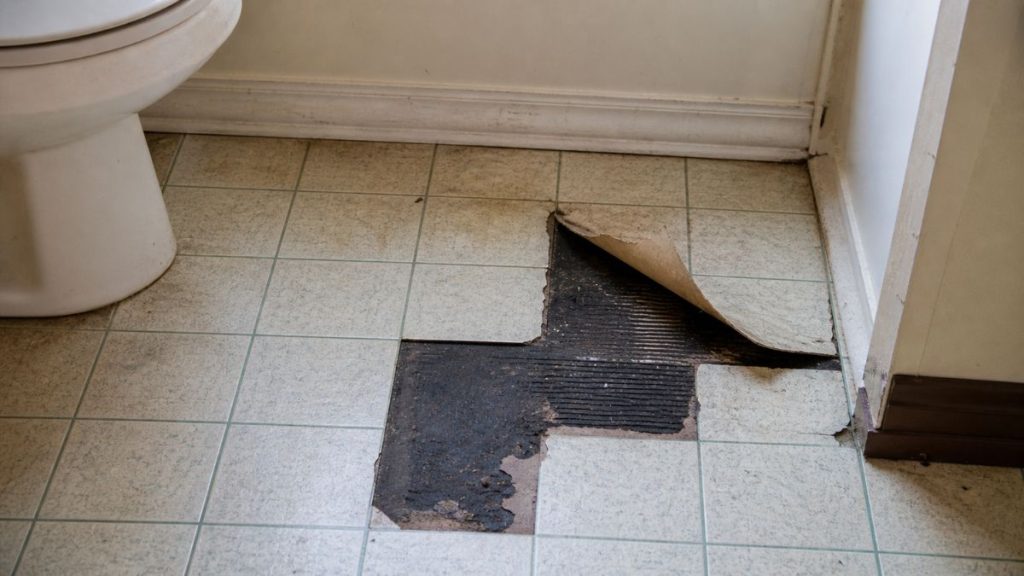
Old vinyl floor tiles with exposed black adhesive underneath- materials commonly associated with asbestos in older homes.
Living Rooms, Bedrooms & Hallways
These spaces often contain asbestos in ceiling and wall materials.
Where to Check
- Popcorn ceilings
- Textured wall coatings
- Drywall joint compound
- Older floor tiles
Key Insight
Popcorn ceilings are one of the most common asbestos concerns in homes.
👉 Related guide:
Do popcorn ceilings have asbestos?
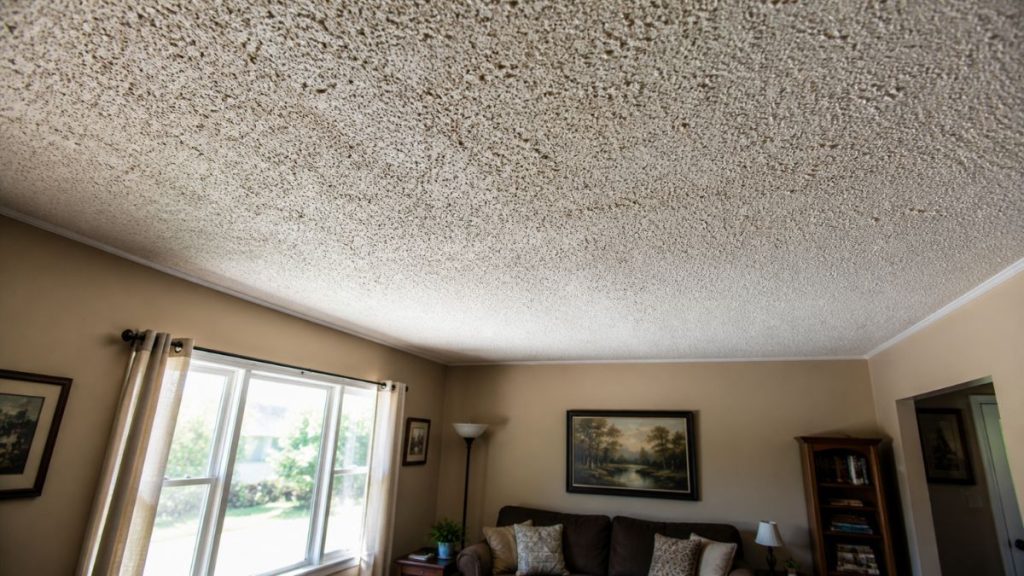
Living room with textured popcorn ceiling-commonly found in older homes where asbestos-containing materials may be present.
Exterior Areas Where Asbestos May Be Found
Asbestos was also widely used in exterior construction materials.
Where to Check
- Cement siding shingles
- Roofing materials and felt
- Soffits and fascia panels
- Gutters and downpipes
Why It Matters
Cutting or breaking exterior materials can release fibers.
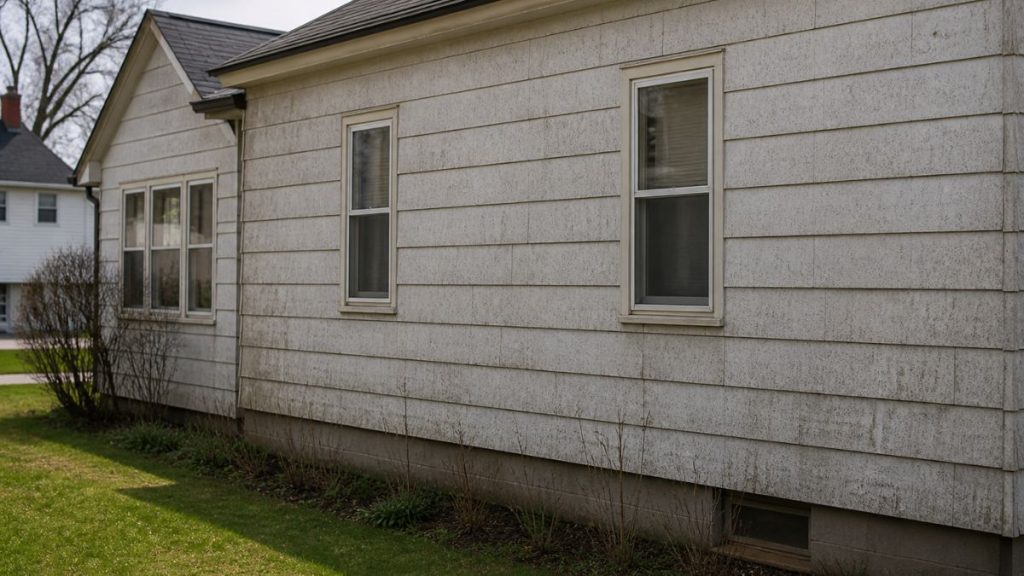
Older home exterior with cement-style siding panels- materials that may contain asbestos in homes built before the 1980s.
Hidden or Overlooked Asbestos Locations
Some asbestos materials are not obvious.
Common Hidden Areas
- Electrical panel backing boards
- Window caulking and sealants
- Fireplace panels
- Garage or workshop materials
What Does Suspected Asbestos Look Like?
Common appearances include:
- White or gray pipe wrap
- Bumpy popcorn ceilings
- Small square floor tiles
- Black adhesive under flooring
- Cement-style siding panels
When Should You Test for Asbestos?
Testing is recommended:
Before Renovation
Especially if removing ceilings, flooring, or insulation
If Material Is Damaged
Cracks, flaking, or deterioration increase risk
Before Cutting or Drilling
Disturbing materials releases fibers
👉 Learn the process:
How to test for asbestos?
What Not to Do If You Suspect Asbestos
Avoid these mistakes:
- Don’t scrape ceilings
- Don’t sand flooring
- Don’t break materials
- Don’t vacuum dust
- Don’t start renovation before testing
Leave It, Test It, or Remove It?
| Situation | Best Action |
|---|---|
| Material intact | Leave it undisturbed |
| Renovation planned | Test first |
| Material damaged | Get professional evaluation |
| Asbestos confirmed | Plan safe removal |
What Happens If Asbestos Is Found?
You typically have three options:
Leave It
If the material is stable and undisturbed
Encapsulation
Seal the material to prevent fiber release
Removal
Required when materials are damaged or renovation is planned
👉 Cost guide:
Asbestos Removal Cost
FAQ: Where Is Asbestos Found in Homes
Where is asbestos most commonly found?
In insulation, ceilings, flooring, and pipe wrap.
Can asbestos be in walls?
Yes, especially in drywall compound and patching materials.
Is asbestos common in basements?
Very common due to pipes and boilers.
Should I test before remodeling?
Yes, always test before disturbing materials.
Need Help Identifying Asbestos in Your Home?
If you’re unsure about materials in your home, the safest step is to get expert guidance before disturbing anything.
At Silver Shield Environmental Ltd, we help homeowners:
- Identify suspect materials
- Understand safe next steps
- Plan testing and removal properly
👉 Visit our homepage:
Silver Shield Environmental
Important Compliance Notice
Asbestos handling is regulated. Always follow safety guidelines.
For official guidance:
Final Thoughts
Asbestos doesn’t just exist in one place- it can be found throughout a home, often in materials that look completely normal.
The biggest risk comes from disturbing materials without knowing what they are.
If you’re planning any renovation, taking time to identify and test materials first can protect your health, your home, and your project.