If you’re remodeling an older home (or even just replacing a floor or ceiling), you’ve probably had this moment:
“Uh… is this asbestos?”
You’re not alone. Asbestos was used in a lot of common building materials for decades, so it still shows up in older homes and buildings.
This guide explains what asbestos is, what it can look like, and where it’s commonly found – in simple, homeowner-friendly language.
Last updated: Feb 2026
Reviewed for accuracy: Feb 2026
Key Summary
Asbestos is a heat-resistant mineral fiber that was used in many building materials. In older homes it may be found in popcorn ceilings, vinyl floor tiles and adhesives, pipe insulation, roofing/siding shingles, and some attic insulation. You can’t confirm asbestos by sight – testing is the only reliable way. If you suspect it, don’t disturb it and test before renovation. (U.S. EPA: Learn about asbestos)
Key Takeaways
- Asbestos is usually mixed into products, so it doesn’t have one “look.”
- The biggest risk is when material is damaged or disturbed (cut, sanded, scraped, drilled).
- The most common suspects in homes: flooring, textured ceilings, pipe wrap, roofing/siding, and some attic insulation.
- Vermiculite attic insulation should be treated carefully – EPA recommends leaving it undisturbed.
- If you’re renovating: test first so you don’t create dust or surprise costs later.
Quick Truth Up Front
You usually cannot confirm asbestos just by looking at it. Many safe materials look similar. The only reliable way to know is professional sampling + lab testing.
Quick Answer: What Is Asbestos?
Asbestos is a naturally occurring mineral made of tiny fibers. It was added to building materials because it resists heat, fire, and chemicals.
In homes, asbestos may be found in:
- Vinyl floor tiles, sheet flooring backing, and adhesives
- Roofing and siding shingles
- Textured paint / popcorn ceilings and patching compounds
- Hot water/steam pipe insulation (blanket, tape, wrap)
- Vermiculite attic/wall insulation (special note below)
Best next step if you suspect it: don’t disturb it—test it before renovation.
Not sure what you’re looking at? Get a no-pressure consult from SilverShield LTD
Quick Comparison Table
| Material (suspect) | Common location | Best next step |
| Popcorn ceiling / textured coating | ceilings | Test before scraping/sanding |
| Vinyl tile + black mastic | kitchens/basements | Test tile + adhesive |
| Pipe wrap / pipe insulation | basement/mechanical | Don’t touch; evaluate if damaged |
| Roofing/siding shingles | exterior | Avoid cutting; test before removal |
| Vermiculite insulation | attic/walls | Leave undisturbed; consult a pro |
What Is Asbestos?
Asbestos isn’t one “product.” It’s a group of minerals that form strong, durable fibers. Builders used it because it worked really well as insulation and fire protection.
The risk comes from breathing in airborne fibers, which is why disturbance (cutting, sanding, scraping, drilling) is the big red flag.
Why Was Asbestos Used So Much?
Because it was:
- Heat- and fire-resistant
- Durable
- Affordable
- Useful in flooring, insulation, cement products, coatings, and adhesives
That’s why older homes (especially those built or remodeled decades ago) can still have asbestos-containing materials somewhere.
Can You Identify Asbestos by Sight?
Not reliably.
Here’s why: asbestos fibers are usually mixed into materials. What you see is the tile, the texture, the wrap—not the fibers.
A quick “Suspect Score”
A material is more “suspect” if:
- The home/building is older and the material looks original
- It matches a common asbestos product (tile, popcorn ceiling, pipe wrap, etc.)
- It’s damaged, crumbly, fraying, dusty, or was recently disturbed
- It’s in a high-likelihood area (basement pipes, attic insulation, older flooring)
Common look-alikes (why guessing goes wrong)
- Fiberglass / mineral wool insulation can look similar to some older insulation
- Modern textured ceilings can look like older popcorn texture
- Cement siding without asbestos can look like asbestos cement
Bottom line: treat it as “suspect” until tested.
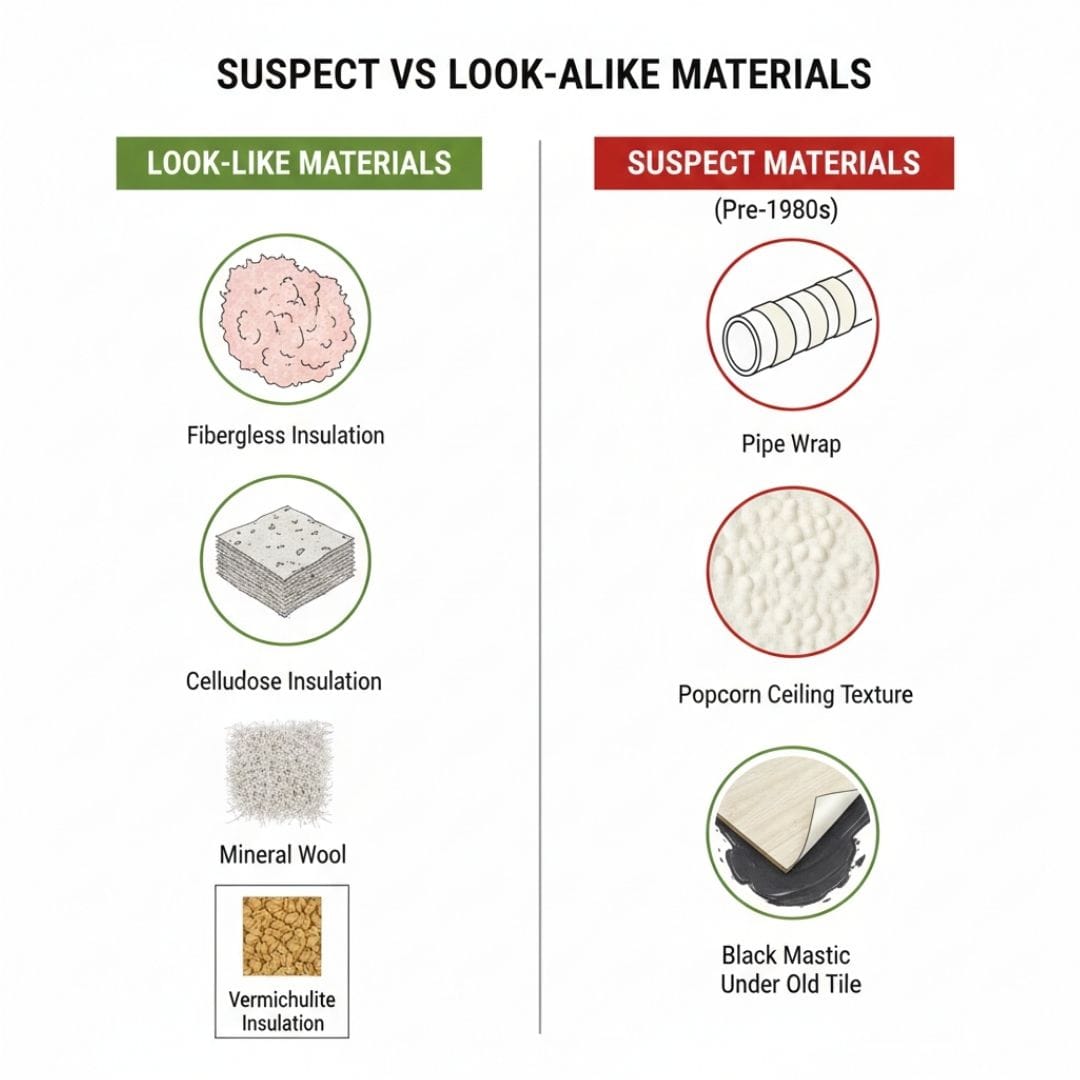
Suspect vs look-alike materials (when to test instead of guessing)
What Does Asbestos Look Like? Material-by-Material
Below are the most common “asbestos look” situations homeowners run into. For each one, here’s what it typically looks like, where it’s found, and the safest next step.
Friendly reminder: this helps you spot suspects, not confirm asbestos.
1) Popcorn ceilings + textured coatings
Typical appearance: bumpy, spray-on “cottage cheese” texture, usually white/off-white.
Common location: living rooms, bedrooms, hallways.
Why people worry: older textured coatings and patching compounds can contain asbestos.
Best next step: if you’re scraping/sanding/removing, test first.
Do not: dry scrape or sand.
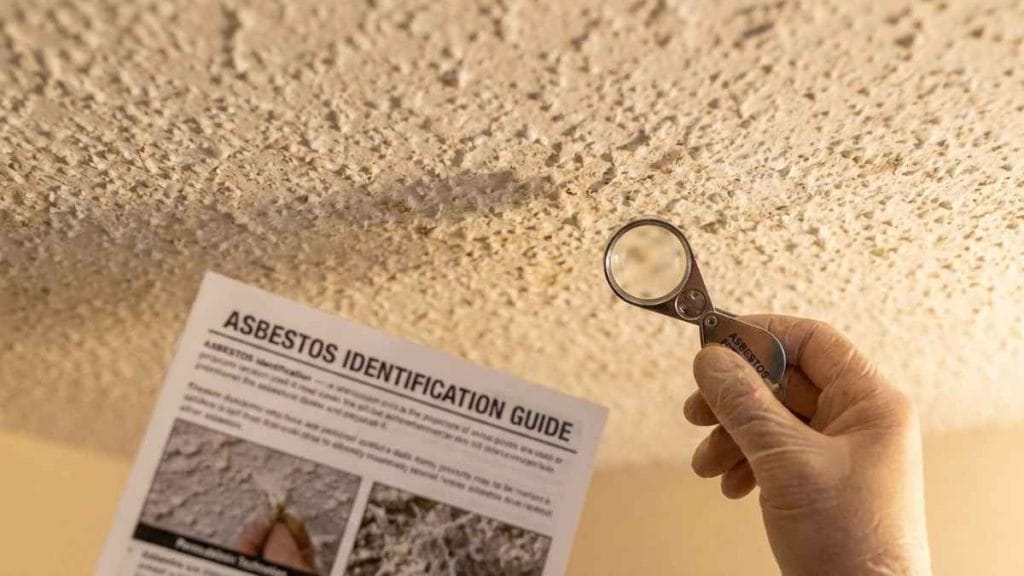
Popcorn ceiling texture in an older home (possible asbestos-containing material)
2) Vinyl floor tile + sheet flooring backing + adhesives (mastic)
Typical appearance:
- Tiles (often small squares) or older sheet vinyl
- Dark adhesive underneath (often called mastic)
Common location: kitchens, basements, laundry rooms, entryways.
EPA notes asbestos may be present in vinyl floor tiles, sheet flooring backing, and adhesives.
Best next step: if you’re lifting tile or grinding adhesive, stop and test first.
Do not: sand/grind the adhesive.
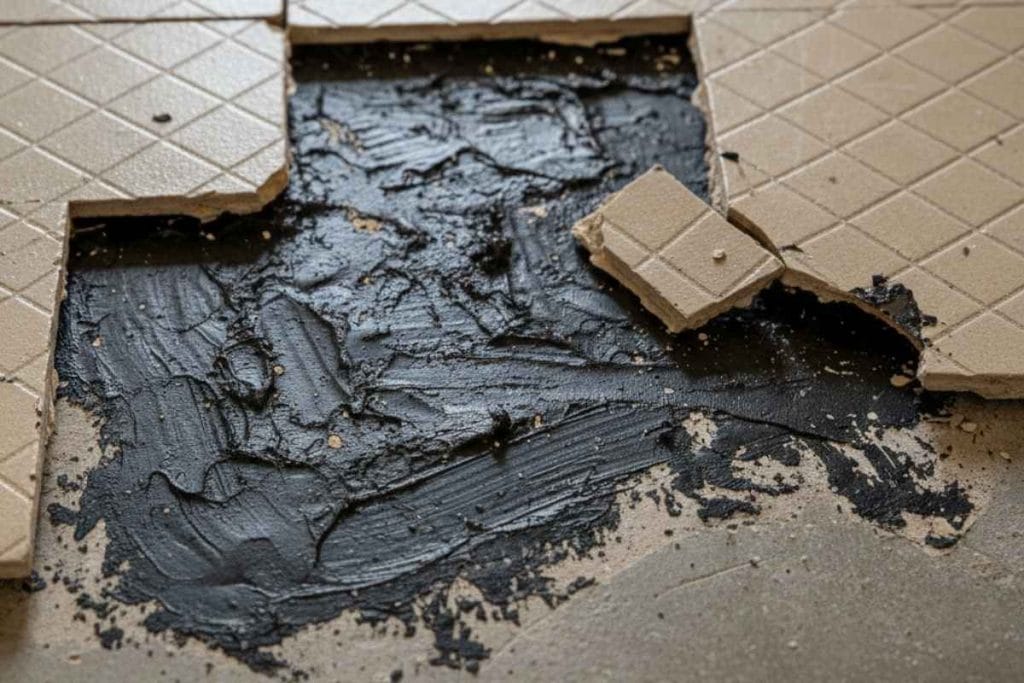
Old vinyl floor tiles with black mastic adhesive underneath (possible asbestos-containing material)
3) Pipe wrap / pipe insulation (steam/hot water pipes)
Typical appearance: white/gray wrap, cloth-like tape, layered insulation, or a hard cement-like coating at elbows.
Common location: basements, mechanical rooms, older boiler areas.
EPA lists hot water and steam pipes as common asbestos locations.
Best next step: if it’s intact, don’t touch it; if it’s fraying or damaged, get a pro evaluation.
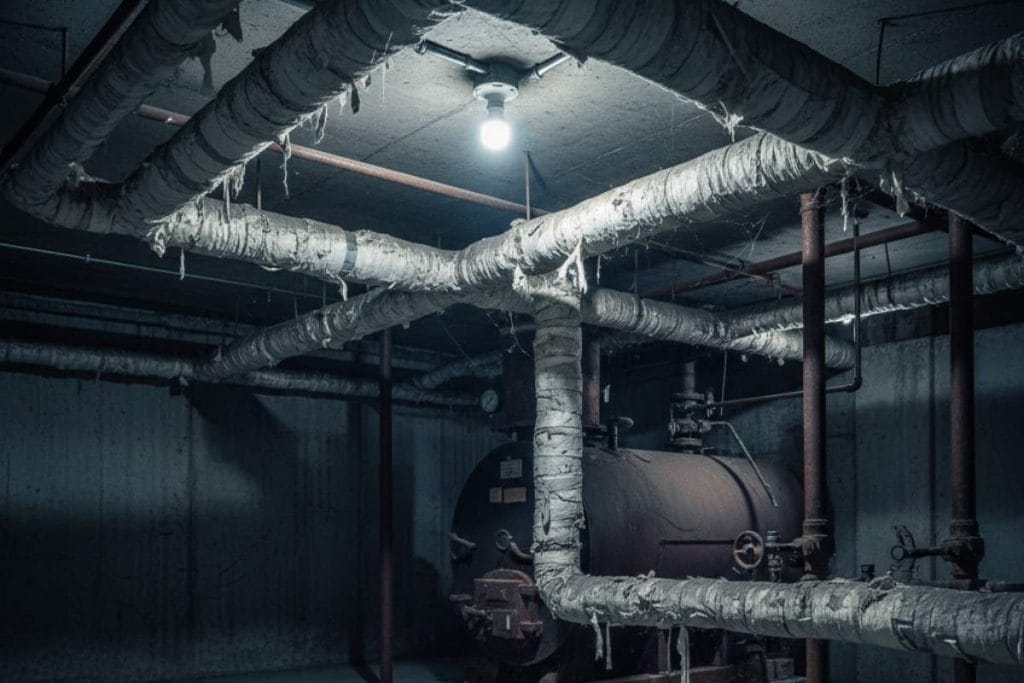
Basement steam pipe with old pipe wrap insulation (possible asbestos-containing material)
4) Roofing and siding shingles
Typical appearance: older shingles or siding panels that look like cement/fiberboard.
Common location: exterior walls, roof surfaces, garage/outbuildings.
EPA includes roofing and siding shingles among typical asbestos-containing materials.
Best next step: avoid cutting or breaking; test before removal.
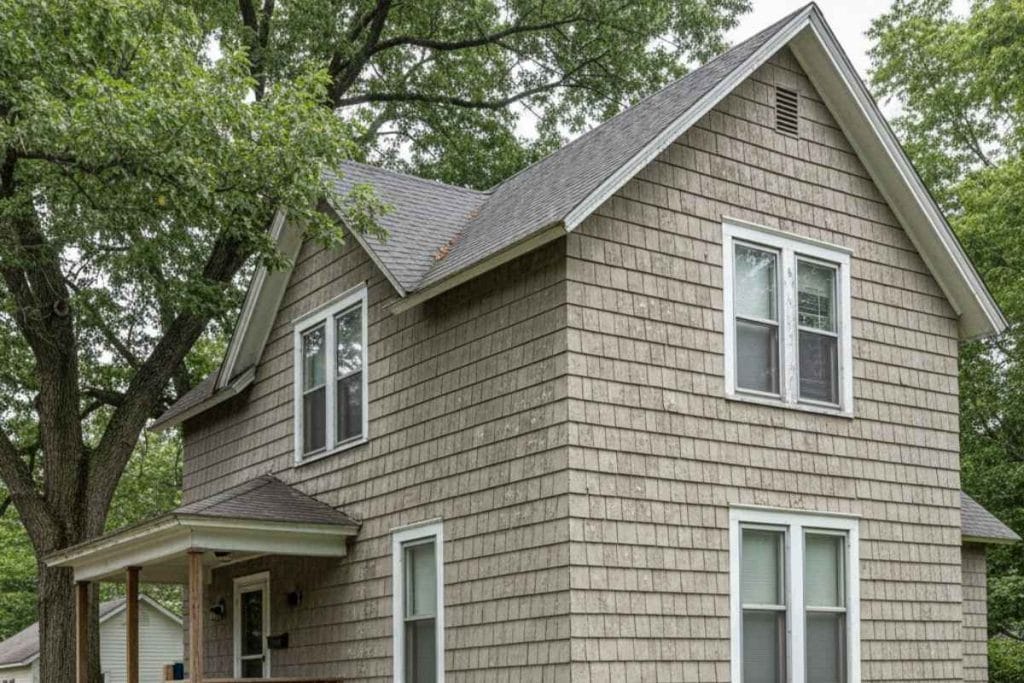
Older cement-style siding shingles on a home exterior (possible asbestos-containing material)
5) Textured paint and patching compounds
Typical appearance: textured wall finishes, older patchwork/joint compound areas.
Common location: walls/ceilings, especially where repairs were done.
EPA lists textured paint and patching compounds as common sources.
Best next step: test before sanding or major drywall work.
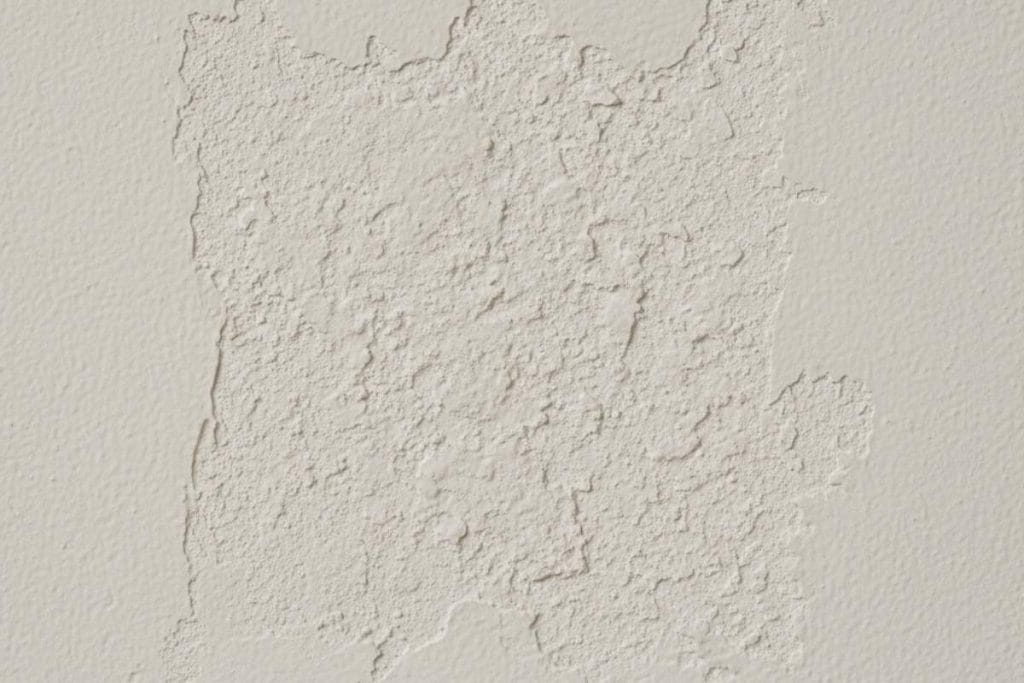
Textured wall patching compound on drywall (possible asbestos-containing material in older homes)
Special Note: Vermiculite Insulation in Attics
This one deserves its own section because it’s a common surprise.
What vermiculite looks like
It often looks like small, lightweight, pebble-like granules—sometimes gray-brown or silvery-gold, with a slightly shiny, flaky look.
Why it matters
EPA advises homeowners to leave vermiculite insulation undisturbed and not attempt to remove it themselves. (U.S. EPA vermiculite insulation guidance)
Best next step
If you have vermiculite in your attic:
- Don’t disturb it
- Avoid storing items in the attic if possible
- Talk with a qualified professional before any attic work
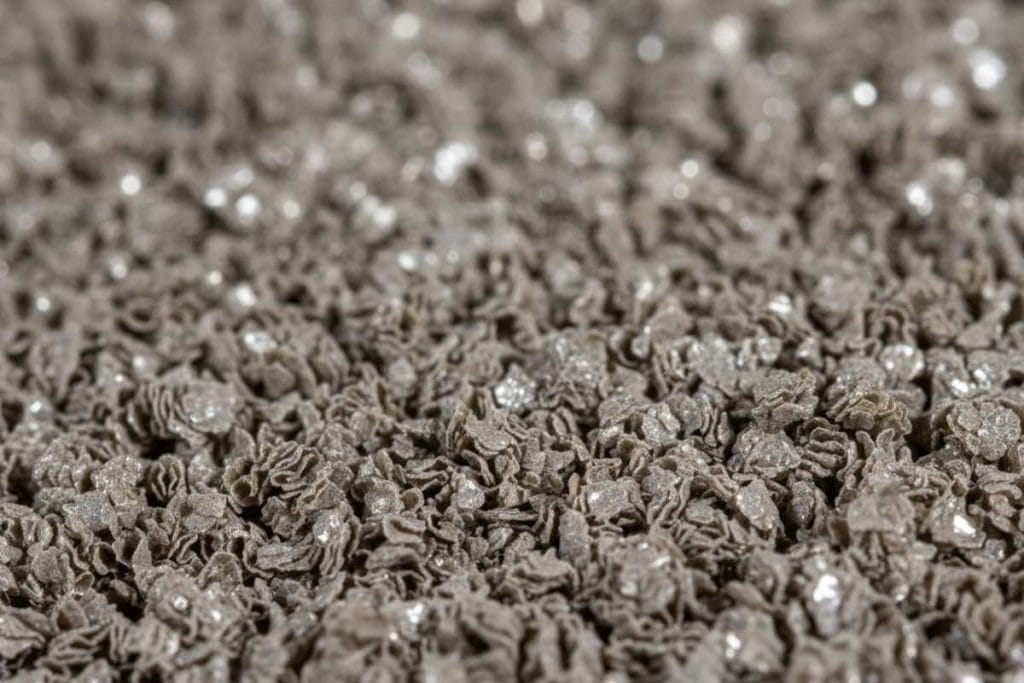
Vermiculite attic insulation granules (may contain asbestos; do not disturb)
Friable vs Non-Friable (Why Condition Matters)
These terms sound technical, but they’re simple:
- Non-friable: more solid/hard material (example: some cement products, tiles)
- Friable: crumbly material that can release fibers more easily (example: certain insulation/wrap)
Even non-friable material can become risky if it’s cut, drilled, sanded, or broken.
Where Is Asbestos Found in a House? Room-by-Room Map
Here’s a quick “where to look” list based on common materials identified by EPA guidance.
Basement & mechanical room
- Pipe insulation / wrap
- Older boiler/furnace area materials
Kitchen & laundry
- Vinyl tile/sheet flooring, backing, adhesives
Living areas
- Popcorn ceilings / textured finishes
- Patching compounds on walls/ceilings
Attic
- Vermiculite insulation (assume suspect; do not disturb)
Exterior
- Roofing and siding shingles/panels
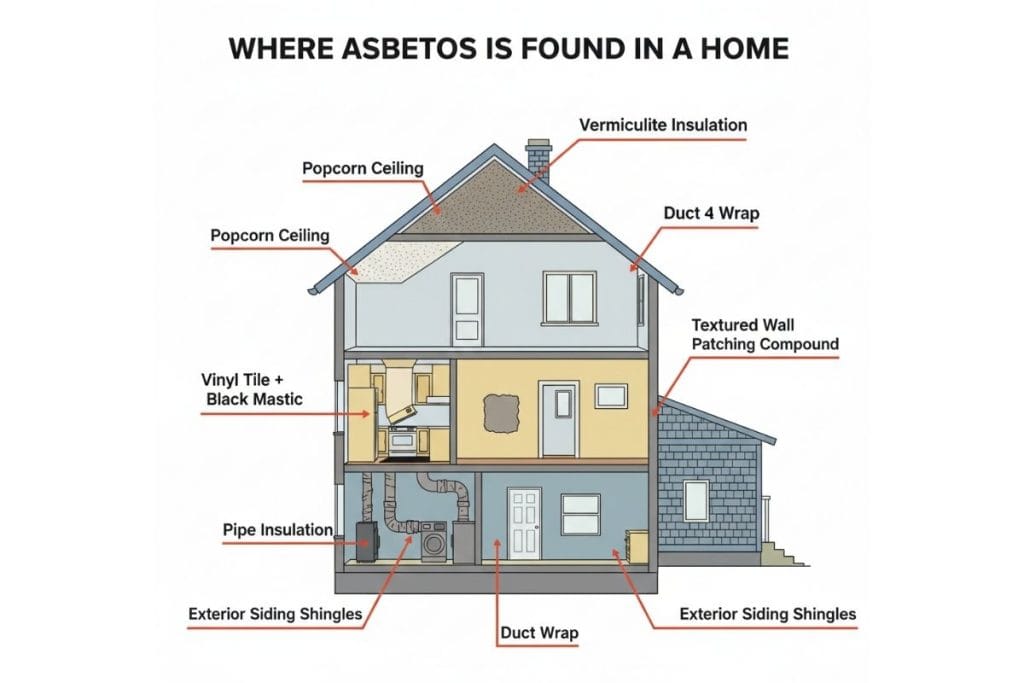
Infographic showing where asbestos is commonly found in an older home (ceilings, floors, pipes, attic, siding)
What to Do If You Suspect Asbestos
If it’s intact and you’re not touching it
- Don’t disturb it
- Monitor its condition
- Plan testing before future projects
If you’re renovating (cutting/scraping/drilling/removing)
- Test first (this avoids expensive surprises mid-project)
If it’s damaged, dusty, fraying, or crumbling
- Stop work
- Limit access to the area
- Get a professional evaluation
If removal is needed
OSHA’s asbestos construction standard (29 CFR 1926.1101) covers removal/encapsulation and renovation work involving asbestos-containing materials—this is why qualified controls and procedures matter.
OSHA’s asbestos construction standard (29 CFR 1926.1101)
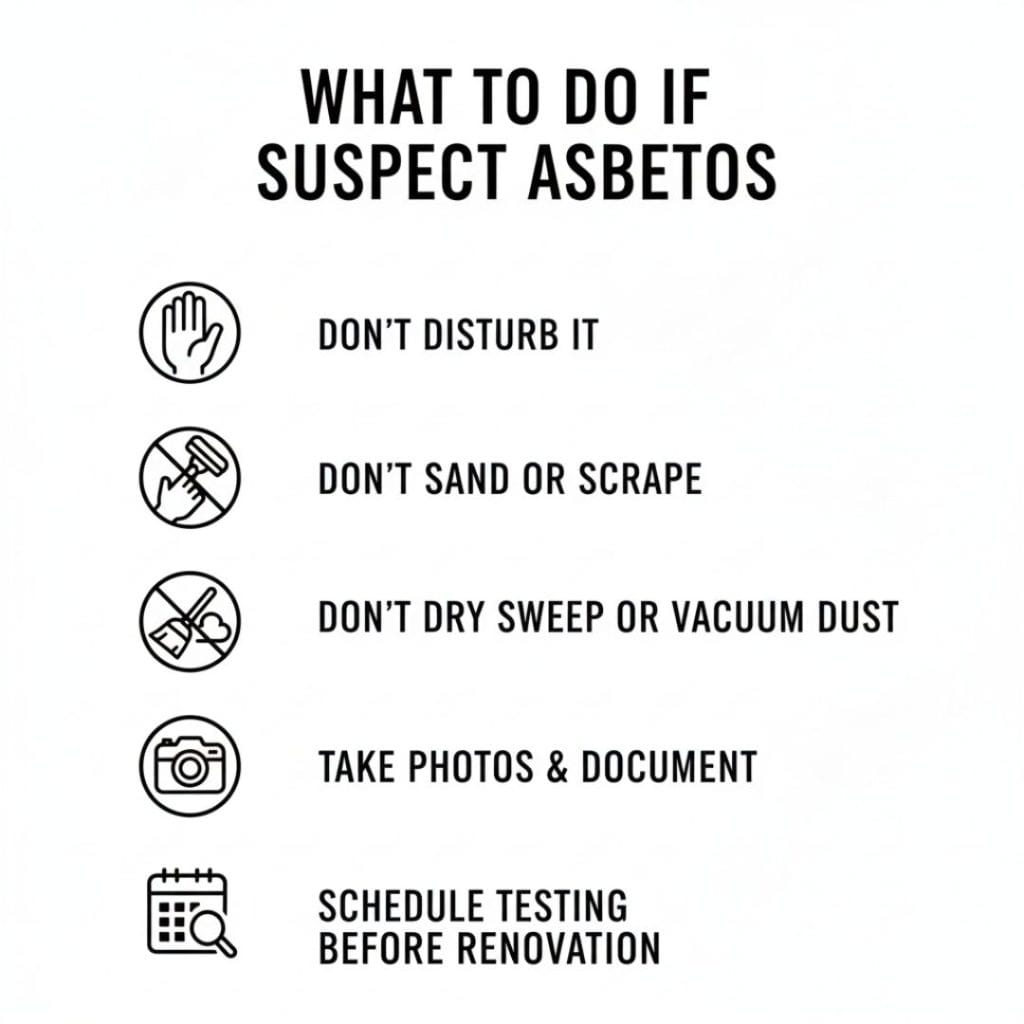
What to do if you suspect asbestos infographic
Planning removal? See typical local pricing here: Asbestos Removal Cost
Not sure what you’re seeing? Share a few photos and your renovation plan and we’ll point you to the safest next step (testing, encapsulation, or removal). → CONTACT US
Asbestos Testing 101: How Testing Works
Testing typically looks like this:
- A qualified person identifies suspect materials
- Small samples are collected safely
- A lab confirms whether asbestos is present
- You get recommendations based on your renovation plan
Friendly tip: If you’re getting testing, share your plan (“I’m removing this floor next week”) so the inspector samples the right materials (tile and adhesive, for example).
Myths vs Facts
Myth: “I can tell asbestos just by looking.”
Fact: You usually can’t confirm without testing.
Myth: “If I touch it once, I’m doomed.”
Fact: Risk depends on the amount and frequency of exposure; the biggest concern is airborne fibers.
Myth: “It’s only in insulation.”
Fact: It can also be in flooring, coatings, roofing/siding, and adhesives.
FAQs
What is asbestos?
A naturally occurring mineral fiber that was used in building materials for heat and fire resistance.
What does asbestos look like?
It doesn’t have one look. It’s usually mixed into materials like tile, textured ceilings, pipe insulation, and some shingles.
Can you see asbestos fibers?
No, individual fibers are microscopic and can’t be seen with the naked eye.
Is popcorn ceiling always asbestos?
No, but older textured coatings can contain asbestos. Testing is the reliable way to know.
What does vermiculite insulation look like?
Granular, pebble-like, lightweight flakes – often shiny. EPA recommends leaving it undisturbed and not removing it yourself.
Should I test before renovation?
Yes, especially before scraping ceilings, removing flooring, or doing demolition work.
Final Thoughts
If you’re in an older home and something looks suspicious, you’re not being paranoid—you’re being smart.
The safest approach is simple:
Don’t disturb it. Test before you renovate.
Want help figuring out the next step?
Get a no-pressure consult and a clear plan (testing, encapsulation, or safe removal).
Talk to a local asbestos professional in Cleveland.